
Top Best Medical Universities in Germany 2025

Germany has consistently ranked among the top destinations for international students pursuing medical education. The country offers a unique combination of high-quality education, low or no tuition fees, world-class research facilities, and a globally respected healthcare system. Whether you’re a European or non-EU student, choosing one of the best medical universities in Germany can be a transformative step toward a successful medical career. In this article, we’ll explore the top universities, admission requirements, course structure, and why Germany stands out in the realm of medical education. Why Study Medicine in Germany? Before we dive into the list of the best medical universities in Germany, let’s look at why Germany is a preferred destination for medical students: 1. Heidelberg University – Faculty of Medicine Founded in 1386, Heidelberg University is Germany’s oldest university and remains one of the most prestigious institutions. Its Faculty of Medicine is globally recognized for biomedical research and clinical practice. Key Highlights: Location: Heidelberg Language of Instruction: Primarily German (Proficiency in German is mandatory) 2. Charité – Universitätsmedizin Berlin Charité – Universitätsmedizin Berlin is one of the largest university hospitals in Europe, affiliated with both Humboldt University and Freie Universität Berlin. It’s a top choice for those looking to study in the capital city. Key Highlights: Location: Berlin Language of Instruction: German 3. Ludwig Maximilian University of Munich (LMU) LMU is frequently listed among the top 100 universities worldwide and is renowned for its Faculty of Medicine. It offers a comprehensive curriculum and cutting-edge research opportunities. Key Highlights: Location: Munich Language of Instruction: German 4. University of Freiburg – Faculty of Medicine Founded in 1457, the University of Freiburg is among the oldest and most research-intensive universities in Germany. Its medical faculty is known for integrating modern research with clinical practice. Key Highlights: Location: Freiburg Language of Instruction: German 5. RWTH Aachen University – Faculty of Medicine RWTH Aachen is one of the largest technical universities in Europe and is well-regarded for its medical faculty, particularly in biomedical engineering and technology integration. Key Highlights: Location: Aachen Language of Instruction: German 6. University of Tübingen – Faculty of Medicine The University of Tübingen is a pioneer in neurological, immunological, and infectious disease research. It offers strong academic support and has numerous international exchange programs. Key Highlights: Location: Tübingen Language of Instruction: German 7. Goethe University Frankfurt – Faculty of Medicine Located in the financial hub of Germany, Goethe University provides modern infrastructure, simulation labs, and a highly ranked medical program. Key Highlights: Location: Frankfurt Language of Instruction: German Admission Requirements for Studying Medicine in Germany Admission to the best medical universities in Germany is competitive and requires meticulous planning. Here’s what you typically need: Motivation Letter and Resume: For certain programs or special tracks. Course Structure Medical education in Germany spans around six years and includes the following stages: 1. Pre-clinical Phase (2 years) Focuses on basic sciences – anatomy, physiology, and biochemistry. 2. Clinical Phase (3 years) Involves lectures, seminars, and practical hospital experience in various departments. 3. Practical Year (1 year) Clinical rotations in internal medicine, surgery, and an elective. 4. State Examination After passing the third medical licensing exam (Approbation), students are eligible to practice as doctors in Germany. Cost of Studying Medicine in Germany Scholarships for International Medical Students While studying at the best medical universities in Germany is already affordable, international students can apply for scholarships such as: These support tuition, living costs, and sometimes even travel expenses. Conclusion Choosing among the best medical universities in Germany means investing in a future built on excellence, research, and global opportunity. From Heidelberg to Charité Berlin and LMU Munich, these institutions offer more than just degrees – they offer a pathway to becoming world-class healthcare professionals. For aspiring doctors, Germany provides a winning combination of academic rigor, hands-on experience, and affordability. Just be prepared for the language requirements and a rigorous application process. Once admitted, the opportunities are boundless. If you’re serious about studying medicine abroad, Germany could be your perfect match. Begin your preparation early, learn the language, and aim for the best – because the best medical universities in Germany are ready to shape your future. ALSO READ Study in Germany For Indian students after 12th Dual Study Programs in Germany in 2025 Popular Undergraduate Courses in Germany Arden University Germany and admission process Study in Ireland For International Students
PhD in Canada for Indian Students in 2025

Pursuing a PhD in Canada for Indian students offers not only world-class education but also exposure to global research opportunities, cultural diversity, and a potential pathway to permanent residency. With globally recognized universities, generous funding options, and advanced research infrastructure, Canada has become one of the most attractive destinations for Indian students aiming to pursue a doctoral degree. This comprehensive guide covers everything you need to know about doing a PhD in Canada from eligibility, admission process, and scholarships to career prospects and visa procedures. Why Choose Canada for a PhD? Here are a few compelling reasons why a PhD in Canada for Indian students is a wise choice: 1. World-Renowned Universities Canada is home to several globally ranked universities, including the University of Toronto, University of British Columbia, McGill University, and University of Alberta. These institutions offer cutting-edge research facilities, experienced faculty, and a collaborative academic environment. 2. Affordable Education Compared to the US or UK, Canada offers relatively affordable tuition fees and living costs. Moreover, most PhD programs offer scholarships or teaching assistantships, which significantly reduce the financial burden on international students. 3. Research-Focused Learning PhD programs in Canada emphasize independent research with guidance from academic supervisors. Students get the opportunity to work on innovative projects, publish research papers, and contribute to advancements in their respective fields. 4. Work While Studying Indian students can work up to 20 hours per week during semesters and full-time during breaks. This allows them to gain valuable work experience and manage their living expenses. 5. Pathway to Permanent Residency The Canadian government offers immigration-friendly policies for international students. Completing a PhD in Canada for Indian students makes them eligible for a Post-Graduation Work Permit (PGWP) and later for permanent residency under the Express Entry system. List of Top Universities for PhD in Canada Here are some of the list of top institutions offering PhD programs across various disciplines: University Name QS Global Rank 2025 Popular Fields of Research University of Toronto #21 Engineering, Life Sciences, AI University of British Columbia #34 Environmental Science, Psychology McGill University #30 Health Sciences, Physics, Law University of Alberta #111 Energy Studies, Computing, Business McMaster University #189 Biomedical Engineering, Sociology Each of these universities offers dedicated support for international students, including career services, counseling, and housing assistance. Eligibility Criteria for PhD in Canada for Indian Students To apply for a PhD in Canada for Indian students, you need to fulfill the following requirements: Some programs may also require GRE or GMAT scores depending on the discipline. Application Process for Indian Students Here’s a step-by-step process to apply for a PhD in Canada for Indian students: 1. Choose Your Research Area Identify your area of interest and shortlist universities offering PhD programs in that domain. 2. Find a Supervisor Contact potential faculty supervisors by sharing your CV and research proposal. Many universities require supervisor approval as part of the application. 3. Prepare Documents Collect transcripts, English proficiency scores, statement of purpose, LORs, and other documents. 4. Submit Online Application Apply through the university’s official portal. Application fees range from CAD 100–150. 5. Attend Interviews (if any) Some departments conduct interviews to evaluate the research aptitude of candidates. 6. Receive Offer Letter Once accepted, you will receive a formal letter of admission. 7. Apply for Study Permit Use the offer letter to apply for a Canadian study visa. Scholarships and Funding Options One of the major advantages of pursuing a PhD in Canada for Indian students is the availability of financial aid. Most universities offer fully funded positions through: Cost of Studying PhD in Canada While many PhD students receive full funding, here is a general estimate of expenses: The total cost may vary depending on the university and location (big cities like Toronto and Vancouver are more expensive than others). If you need any help regarding admission and others feel free to contact a leading consultant of Study in Canada For International Students. Student Visa Process for Indian Applicants To study a PhD in Canada for Indian students, you must obtain a Canadian Study Permit: Documents Required: Application Timeline: Apply at least 3–4 months in advance. Visa processing usually takes 4–8 weeks. Career Opportunities After PhD After completing a PhD in Canada for Indian students, there are multiple career paths: Canada’s demand for highly qualified researchers and professionals makes it easier for PhD graduates to secure jobs and permanent residency. Final Thoughts Pursuing a PhD in Canada for Indian students opens up a world of academic excellence, professional growth, and cross-cultural exposure. With ample funding, flexible immigration policies, and global recognition, Canada offers an ideal environment to nurture intellectual curiosity and research ambitions. If you’re an Indian student passionate about making a difference through research, now is the perfect time to explore PhD opportunities in Canada and take the next big step in your academic journey. ALSO READ Cost of Living in Canada ABC ID Card Registration Online Human Resource Management Courses in Canada Medical Courses in Canada After 12th Medical Courses in Canada After 12th
Best Medical Courses Without NEET Exam After 12th

For many students who are passionate about healthcare, passing the NEET (National Eligibility cum Entrance Test) often feels like the only way to move forward. But here’s the silver lining: there are plenty of rewarding medical career paths that don’t require NEET. In this comprehensive guide, we will explore the best medical courses without NEET exam after 12th, opening new avenues for students to pursue their passion in healthcare. Why Consider Medical Courses Without NEET? The NEET exam is incredibly competitive, with limited seats and a tough syllabus. Many talented students might not succeed despite their hard work. Fortunately, the medical field is expansive and offers numerous professional courses that don’t require becoming a doctor but are still vital to healthcare services. From diagnostics and technology to management, therapy, and research, students can explore a variety of less stressful yet equally fulfilling opportunities. List of Best Medical Courses Without NEET Exam After 12th Below are some of the most popular and career-focused medical courses that don’t require NEET: No. List of Best Medical Courses Without NEET Exam 1 Bachelor of Science in Nursing (B.Sc. Nursing) 2 Bachelor of Physiotherapy (BPT) 3 Bachelor of Occupational Therapy (BOT) 4 Bachelor of Science in Biotechnology 5 Bachelor of Science in Medical Laboratory Technology (BMLT) 6 Bachelor of Science in Radiology and Imaging Technology 7 Bachelor of Science in Nutrition and Dietetics 8 Bachelor of Pharmacy (B.Pharm) 9 Bachelor of Audiology and Speech-Language Pathology (BASLP) 10 Bachelor of Science in Psychology 1. Bachelor of Science in Nursing (B.Sc. Nursing) B.Sc. Nursing is one of the most respected and sought-after medical careers. Nurses are essential in patient care and play a vital role in every healthcare setting. 2. Bachelor of Physiotherapy (BPT) Physiotherapists assist patients in regaining physical strength and mobility, making this an excellent choice for students interested in sports, rehabilitation, and direct patient interaction. 3. Bachelor of Occupational Therapy (BOT) Occupational Therapy is all about empowering patients to regain their independence in daily activities after facing injuries or illnesses. 4. Bachelor of Science in Biotechnology Biotechnology merges biology with technology, and professionals in this field are involved in drug development, genetic engineering, and much more. 5. Bachelor of Science in Medical Laboratory Technology (BMLT) Medical lab technicians are the ones who analyze blood, urine, and other samples to aid in diagnosis. Their work is vital in every hospital or clinic. 6. Bachelor of Science in Radiology and Imaging Technology Radiographers utilize X-rays, MRIs, CT scans, and ultrasound machines to assist doctors in diagnosing internal conditions. 7. Bachelor of Science in Nutrition and Dietetics Nutritionists are becoming increasingly essential in preventive healthcare, and this course beautifully combines food science with patient care. 8. Bachelor of Pharmacy (B.Pharm) Pharmacy graduates have the chance to dive into drug manufacturing, testing, and regulation. If you have a passion for chemistry and medicine, this could be the perfect path for you. 9. Bachelor of Audiology and Speech-Language Pathology (BASLP) This program equips students to evaluate and treat individuals with speech, hearing, and language challenges. The demand for professionals in this area is on the rise, both in cities and rural communities. 10. Bachelor of Science in Psychology While it may not be strictly medical, psychology plays a crucial role in overall well-being and is a rapidly expanding field with a wealth of career opportunities. Other Short-Term Diploma Courses in Medical Fields (Without NEET) These courses are ideal for students looking for quick job-oriented training and faster entry into the healthcare industry. Career Scope and Job Opportunities Opting for the best medical courses without NEET exam after 12th opens doors to: The demand for allied healthcare professionals is growing rapidly due to the expansion of the healthcare sector in India and abroad. These courses are not only cost-effective compared to MBBS/BDS but also offer respectable and stable career growth. APPLY NOW Study in Australia for International Students Final Thoughts While NEET is certainly a significant pathway into medical education, it’s not the only option out there. The best medical courses without NEET exam after 12th provide students with the opportunity to build successful careers in healthcare without going through the pressure of competitive entrance exams. Whether you’re drawn to diagnostics, therapy, research, or patient care, there’s a course that fits your interests and strengths. The trick is to pinpoint your passion early on, conduct thorough research, and select a course that aligns with your long-term career aspirations. FAQs Can I become a doctor without NEET? No, to become an MBBS doctor in India, NEET is mandatory. Is BPT a good career option without NEET? Yes, BPT is highly respected with global job opportunities. Can I pursue B.Sc. Nursing without NEET? Yes, most nursing colleges do not require NEET for admission. What is the average salary after paramedical courses? Starting salaries range from ₹2.5 – ₹5 LPA depending on specialization and experience. Are medical lab technicians in demand? Yes, they are critical for accurate diagnosis and are in high demand. ALSO READ Medical Courses in Canada After 12th Medical Universities in New Zealand Medical Colleges in Singapore MBBS Cost in Australia for Indian Students Study in Australia After 12th
MBBS Cost in Australia for Indian Students in 2025

Australia has emerged as a popular destination for Indian students aspiring to pursue MBBS due to its world-class education system, modern infrastructure, and globally recognized medical degrees. However, one of the most critical aspects to consider before applying is understanding the MBBS cost in Australia for Indian students. From tuition fees to accommodation and living expenses, this article will provide a detailed breakdown of the total expenses involved in studying MBBS in Australia. Why Study MBBS in Australia? Before diving into the costs, let’s briefly explore why Australia is an ideal destination for MBBS: MBBS Course Structure in Australia In Australia, MBBS is offered as an undergraduate medical degree called Bachelor of Medicine and Bachelor of Surgery (MBBS) or Doctor of Medicine (MD), depending on the university. MBBS Cost in Australia for Indian Students in 2025 The MBBS cost in Australia for Indian students varies based on the university, location, and lifestyle choices. The overall cost can be divided into several categories: 1. Tuition Fees Tuition is the most significant part of the MBBS cost in Australia for Indian students. On average: University Annual Tuition Fee (AUD) Annual Tuition Fee (INR Approx.) University of Melbourne AUD 80,000 ₹43–44 lakhs University of Sydney AUD 80,000 – 85,000 ₹44–46 lakhs Monash University AUD 77,000 ₹42 lakhs Australian National University AUD 85,000 ₹46 lakhs University of Queensland AUD 75,000 ₹41 lakhs Note: Tuition fees may increase yearly by 2–5%. Always refer to the university’s official site for updated information. 2. Living Expenses Living in Australia is relatively expensive. However, cities like Adelaide and Perth may be slightly cheaper than Sydney or Melbourne. Expense Category Monthly Cost (AUD) Annual Cost (AUD) Annual Cost (INR Approx.) Accommodation 700 – 1,200 8,400 – 14,400 ₹4.5 – ₹7.5 lakhs Food and Groceries 300 – 500 3,600 – 6,000 ₹2 – ₹3.3 lakhs Transport 100 – 150 1,200 – 1,800 ₹65,000 – ₹1 lakh Health Insurance 500 – 600 500 – 600 ₹27,000 – ₹33,000 Miscellaneous 200 – 300 2,400 – 3,600 ₹1.3 – ₹2 lakhs Total Living Expenses (Annual): ₹9 – ₹13 lakhs 3. Other Costs Total MBBS Cost in Australia for Indian Students in 2025 To give you a ballpark figure, the MBBS cost in Australia for Indian students for a 5 to 6-year course would be: ✅ Total Estimated Cost: ₹2.6 – ₹3 crores Scholarships for Indian Students To ease the financial burden, several Australian universities and government bodies offer scholarships. These include: 1. University-Based Scholarships 2. Australian Government Scholarships Scholarships can cover 10% to 100% of tuition fees depending on academic performance, financial background, and university policies. Part-Time Work Opportunities International students can work up to 48 hours per fortnight during academic sessions and full-time during holidays. This can significantly help in covering living expenses but may not impact tuition costs much. Return on Investment (ROI) While the MBBS cost in Australia for Indian students is high, the long-term ROI can be attractive. Graduates can also pursue licensing exams such as AMC (Australian Medical Council) to practice permanently in Australia. Conclusion Understanding the MBBS cost in Australia for Indian students in 2025 is essential for financial planning. While the total cost may range between ₹2.6 to ₹3 crores, the investment is justified by the quality of education, international exposure, and high earning potential post-graduation. Students should explore scholarships, budget wisely, and consider long-term career goals when making this life-changing decision. If you are looking for admission feel free to contact a leading consultant of Study in Australia for International Students. FAQs 1. Is NEET required to study MBBS in Australia? Yes, Indian students must qualify for NEET to be eligible to apply for MBBS abroad, including in Australia. 2. Can Indian students get PR in Australia after MBBS? Yes, students can apply for post-study work visas and later transition to Permanent Residency through skilled migration pathways. 3. Is it cheaper to study MBBS in Australia than in the US or UK? Australia is generally more affordable than the US but slightly more expensive than some UK universities. However, it offers better work opportunities post-study. 4. How competitive is MBBS admission in Australia? Top universities have limited seats and high academic entry requirements, including excellent grades, UCAT or GAMSAT scores, and interviews. 5. Can I work as a doctor in India after MBBS in Australia? Yes, but you must clear the FMGE (Foreign Medical Graduate Examination) to practice in India. ALSO READ How to Get Scholarship to Study in Australia from India Study in Australia Without IELTS for International Students Study in Australia After 12th Study in Australia Without IELTS Top IT Courses in Australia For PR
Cost of Living in Canada: A Complete Guide for 2025

Canada is one of the most popular destinations for students, immigrants, and skilled professionals due to its high quality of life, world-class education, and excellent healthcare system. However, before making the move, it’s important to understand the cost of living in Canada. This comprehensive guide will break down the average expenses you can expect, from housing and groceries to education and transportation, helping you make informed financial decisions. Overview: Why the Cost of Living in Canada Matters Whether you’re planning to study, work, or settle permanently in Canada, budgeting is crucial. The cost of living in Canada varies significantly depending on the city, lifestyle, and type of accommodation. While Canada offers a better standard of living compared to many countries, it’s essential to prepare for the associated expenses. Average Monthly Expenses in Canada Here’s a snapshot of typical monthly costs for a single person living in a major Canadian city: Expense Category Average Monthly Cost (CAD) Rent (1-bedroom apartment) $1,300 – $2,200 Utilities (electricity, water, gas) $100 – $200 Internet $60 – $100 Groceries $300 – $600 Transportation (public) $100 – $160 Cell phone $40 – $80 Entertainment & Dining $150 – $300 Total Average Monthly Cost: $2,050 – $3,640 The actual cost of living in Canada depends on where you live and your spending habits. Housing Costs in Canada Housing is the biggest contributor to the cost of living in Canada. Cities like Toronto, Vancouver, and Ottawa are among the most expensive, while smaller towns and provinces such as Manitoba or Saskatchewan offer more affordable options. Major City Housing Costs (1-Bedroom Apartment in City Center): If you opt to share accommodation or live farther from the city center, your rent may decrease significantly. Utility and Internet Bills Monthly utility bills typically include heating, electricity, water, and garbage collection. The cost of utilities in Canada ranges between CAD $100 and CAD $200 depending on the apartment size and season. Internet costs an additional CAD $60 to CAD $100 per month, depending on the speed and provider. NOTE- If you want to Study in Canada feel free to contact Anaad Worldwide in a low budget Food and Grocery Costs Grocery expenses vary depending on your dietary preferences and shopping habits. On average, an individual spends CAD $300 to CAD $600 per month on groceries. Here’s a quick list of average prices: Eating out frequently will raise your cost of living in Canada. A meal at a mid-range restaurant might cost around CAD $20–$40 per person. Transportation Expenses Transportation is relatively affordable in Canada, especially if you rely on public systems. Monthly passes range from CAD $90 to CAD $160, depending on the city. Public Transport Monthly Pass: If you plan to own a car, fuel prices average around CAD $1.60 per litre, and additional expenses include insurance, maintenance, and parking, which can significantly increase the cost of living in Canada. Healthcare and Insurance Canada provides universal healthcare to permanent residents and citizens. However, international students and temporary residents must purchase private health insurance, which can cost CAD $600 to CAD $1,000 per year. Some provinces, like British Columbia and Ontario, offer health coverage to certain international students through provincial plans, reducing out-of-pocket expenses. Education Costs If you’re moving to Canada for education, tuition will be one of your biggest expenses. Here’s an overview of average annual tuition fees for international students: In addition to tuition, the cost of living in Canada for students includes books, supplies, and personal expenses, usually totaling CAD $10,000 to CAD $15,000 annually. Miscellaneous Expenses Besides essentials, you should budget for leisure, clothing, and personal care items: These miscellaneous items, though small individually, can add up over time. City-Wise Cost Comparison Here’s a quick breakdown of the cost of living in Canada by city for a single person: City Monthly Living Cost (CAD) Toronto $3,000 – $3,800 Vancouver $3,000 – $3,700 Montreal $2,000 – $2,800 Calgary $2,200 – $3,000 Halifax $2,100 – $2,900 Living in suburban or rural areas will lower these costs considerably, but job opportunities and access to services may also be limited. Tips to Manage the Cost of Living in Canada Here are some ways to keep your expenses in check: Smart budgeting and conscious spending can help you maintain a comfortable lifestyle despite the high cost of living in Canada. Final Thoughts The cost of living in Canada may seem high at first glance, especially in urban areas, but it comes with numerous benefits—clean air, a safe environment, a multicultural society, and access to high-quality public services. With careful planning and budgeting, you can make the most of your time in Canada, whether you’re pursuing education, employment, or a fresh start. ALSO READ Civil Engineering Courses in New Zealand ABC ID Card Registration Online For Students Top Scholarships in Georgia for International Students Study in Germany For Indian students
Civil Engineering Courses in New Zealand 2025

New Zealand is globally recognized for its high-quality education system, safe and scenic environment, and industry-aligned academic programs. Among the various disciplines, civil engineering courses in New Zealand have gained immense popularity among international students due to their practical orientation, advanced curriculum, and global recognition. Whether you’re aspiring to build bridges, design highways, or plan smart cities, New Zealand offers top-notch civil engineering programs that lay a strong foundation for your future career. In this article, we will explore the scope, top universities, course structure, eligibility, tuition fees, scholarships, and job prospects related to civil engineering courses in New Zealand. Why Study Civil Engineering in New Zealand? Choosing to pursue civil engineering courses in New Zealand comes with a wide array of benefits: Top Universities Offering Civil Engineering Courses in New Zealand Here are some of the top institutions offering civil engineering courses in New Zealand: 1. University of Auckland 2. University of Canterbury 3. University of Waikato 4. Auckland University of Technology (AUT) 5. Massey University Types of Civil Engineering Courses in New Zealand Students can choose from a variety of civil engineering courses in New Zealand based on their academic background and career goals: 1. Undergraduate Programs (Bachelor’s Degree) 2. Postgraduate Programs (Master’s Degree) 3. Doctoral Programs (PhD) 4. Diploma and Certificate Programs Civil Engineering Specializations Available Civil engineering is a vast field, and students can specialize in the following domains: Choosing a specialization helps align your academic path with your career interests. Eligibility Criteria for International Students To apply for civil engineering courses in New Zealand, students typically need to meet the following eligibility criteria: For Undergraduate Programs: For Postgraduate Programs: Tuition Fees and Cost of Living Tuition Fees (Approximate): Living Expenses: International students are allowed to work part-time (up to 20 hours/week) during the semester and full-time during holidays. Scholarships for International Students Many universities and government agencies in New Zealand offer scholarships to support international students. Some of the notable ones include: These scholarships may cover tuition fees, living costs, and travel allowances. Career Opportunities After Civil Engineering Courses in New Zealand Graduates from civil engineering courses in New Zealand enjoy excellent job prospects both within the country and globally. With infrastructure and urban development on the rise, civil engineers are in high demand. Job Roles: Average Salary: Entry-level salaries for civil engineers in New Zealand start from NZD 50,000 – NZD 70,000 per year and can go up to NZD 100,000+ with experience. Employers: Graduates can also explore opportunities in Australia, the Middle East, Canada, and the UK due to the international recognition of their qualifications. NOTE- If you want to get admission for Study in New Zealand feel free to contact us Anaad Worldwide Final Thoughts Pursuing civil engineering courses in New Zealand is a wise investment for students aiming for a rewarding and globally recognized engineering career. With its strong academic infrastructure, emphasis on research, and industry integration, New Zealand equips students with both theoretical knowledge and real-world experience. Whether you’re an undergraduate aspirant or a postgraduate scholar, New Zealand provides a vibrant academic journey that opens doors to global engineering opportunities. FAQs Q1: Are civil engineering degrees from New Zealand recognized internationally?Yes, they are accredited by Washington Accord signatories, ensuring global recognition. Q2: Can I work while studying civil engineering in New Zealand?Yes, international students can work up to 20 hours/week during term and full-time during holidays. Q3: What is the duration of a bachelor’s degree in civil engineering in New Zealand?Typically 4 years. Q4: Is there a demand for civil engineers in New Zealand?Yes, especially in infrastructure, transportation, and environmental projects. Q5: Can I get permanent residency after studying in New Zealand?Graduates in skilled occupations like civil engineering may be eligible for post-study work visas and eventually apply for PR based on immigration policies. ALSO READ Masters in New Zealand for international students Study finance in New Zealand New Zealand work visa requirements MBA in New Zealand New Zealand work visa
ABC ID Card Registration Online For Students
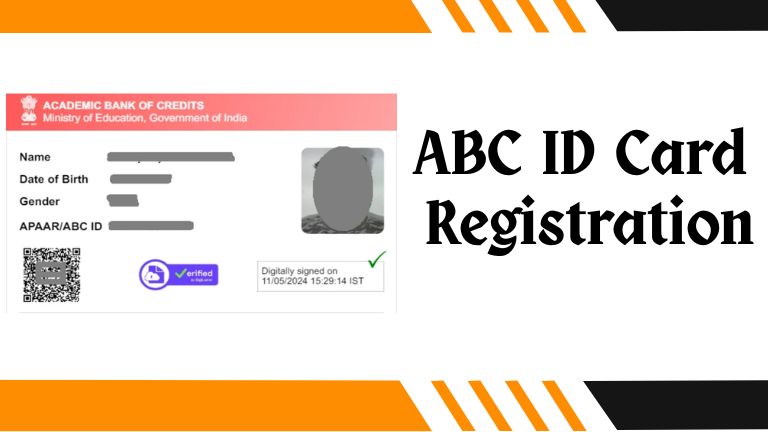
In line with India’s National Education Policy (NEP) 2020, the Academic Bank of Credits (ABC) was launched as a digital tool designed to help track, manage, and transfer students’ academic credits throughout their educational journey. At the heart of this initiative is the ABC ID, commonly known as the abc id card, which serves as a unique academic identifier for each learner. Whether you’re a student, an academic advisor, or a parent, it’s important to grasp the abc id card registration process. In this guide, we’ll walk you through everything you need to know — from its purpose and benefits to a detailed step-by-step process for apply abc id card registration. What is the ABC ID Card? The abc id card is a digital identification number assigned to every learner in India as part of the Academic Bank of Credits framework. It allows students to gather, store, and redeem academic credits earned from various institutions across different fields and courses. This initiative fosters a flexible and student-centered education system. With the abc id card registration, students can transition smoothly between institutions, courses, and even learning modes (online or offline), all while keeping their academic progress intact. Objectives of ABC and the ID Card The core goals behind abc id card registration include: Who Needs ABC ID Card Registration? The abc id card registration is crucial for: If you’re part of any formal higher education system in India, you’re encouraged — and in many cases, required — to complete your abc id card registration. Key Features of ABC ID Card Here are some standout features of the abc id card: Feature Description Unique ID A 12-digit Academic Bank of Credits ID linked to your DigiLocker Digital Credit Ledger Stores all your earned credits from various recognized institutions Credit Redemption Use earned credits to rejoin programs or complete degrees National Portability Valid across UGC, AICTE, and NEP-compliant institutions How to Complete ABC ID Card Registration (Step-by-Step) Ready to get your ABC ID card registration? Just follow these straightforward steps through the official portal: Step 1: Visit the ABC Portal Step 2: Click on “Student” → “My Account” Step 3: Sign in with DigiLocker Step 4: Fill in Personal Details Step 5: Create ABC ID Step 6: Download and Save How Does the ABC ID Work? After you finish registering for your ABC ID card online, your academic institution will upload credit data to your ABC account after each course or semester. These credits are stored digitally and can be: This digital tracking makes your academic journey clear, flexible, and ready for the future. Documents Required for ABC ID Card Registration You won’t need a ton of documents to register for your ABC ID card. Just make sure you have the following: Benefits of ABC ID Card Registration Still wondering why you should complete your abc id card registration? Here are some advantages: 1. Academic Freedom Choose courses from multiple institutions and get them credited under one ABC ID. 2. Flexible Learning Take a break, resume later, or switch institutions without losing credits. 3. Digital Record No more worrying about lost mark sheets. Your entire academic record is digitally stored. 4. Career Integration Showcase verified academic achievements when applying for jobs or higher studies. Common Issues During ABC ID Registration (and Solutions) Issue Solution Aadhaar OTP not received Check if mobile number is linked to Aadhaar DigiLocker login error Clear browser cache or try incognito mode Institute not found Contact your academic institution’s nodal officer Credit data missing Ask your college to upload the latest credit details Important Tips for Students Final Thoughts The abc id card registration is a vital step toward a digital, student-friendly, and flexible education system in India. It enables portability, lifelong learning, and smooth academic transitions. As more institutions join the Academic Bank of Credits framework, having your ABC ID will soon be as important as carrying your student ID or PAN card. If you’re a student in India — whether in traditional college, online learning, or vocational training — don’t delay your abc id card registration. It’s quick, free, and opens doors to a smarter educational future. FAQs 1. Is ABC ID card registration mandatory? Absolutely, it’s required for students at UGC-recognized institutions. 2. Is there any fee for registration? Nope, registering is completely free! 3. Can I register without Aadhaar? Unfortunately, Aadhaar is necessary for DigiLocker integration. 4. Can I use the same ABC ID across multiple institutions? Yes, your ABC ID is valid at all recognized institutions. 5. Can credits earned on SWAYAM be added? Yes, as long as the course is approved and your account is linked. 6. What if I lose my ABC ID? No worries! You can log in through DigiLocker to recover or download it again. 7. Is the ABC ID valid for life? Yes, it serves as your lifelong academic identity. 8. Can students outside India use ABC? Only if they’re enrolled in Indian institutions that are part of the ABC framework. 9. What happens to old academic records? Only the credits earned after registration will show up unless your institution updates them retroactively. 10. How do I know if my college supports ABC? Check the list of participating institutions on https://www.abc.gov.in ALSO READ Apaar ID Card Registration Online Top Scholarships in Georgia for International Students Study in Germany For Indian students PhD courses in Bioinformatics in USA Medical Courses in Canada After 12th
Ulyanovsk State University Fees, Courses, Scholarships

Ulyanovsk State University stands out as one of Russia’s leading public research institutions, providing top-notch education across a wide range of fields. Nestled in Ulyanovsk, a city rich in history and culture, the university is well-known for its forward-thinking approach, affordable tuition, and a vibrant mix of students from around the globe. Whether you’re aiming to become a doctor, an engineer, or an entrepreneur, Ulyanovsk State University creates the perfect setting for both academic and personal growth. Overview of Ulyanovsk State University Established in 1988, Ulyanovsk State University (or UlSU for short) began as a branch of Moscow State University. Over the years, it has evolved into a fully independent institution and now ranks among the top public universities in Russia. With a student body of over 14,000 from more than 40 countries, the university places a strong emphasis on innovation, research, and international collaboration. Ulyanovsk State University offers a variety of undergraduate, postgraduate, and doctoral programs in fields such as medicine, engineering, economics, law, humanities, and natural sciences. The university’s dedication to quality education shines through its modern facilities, experienced faculty, and collaborative research initiatives. Academic Programs Offered Ulyanovsk State University features a diverse range of academic disciplines. Here are some of the most popular faculties and programs: 1. Faculty of General Medicine Highly sought after by international students, the Faculty of General Medicine provides a 6-year MBBS program in English. The curriculum adheres to European standards and includes practical clinical experience in top hospitals throughout Ulyanovsk. This degree is recognized by the WHO, NMC (India), and various other international medical organizations. 2. Faculty of Engineering and Technology The engineering faculty at the university offers solid training in fields like mechanical engineering, computer science, robotics, and telecommunications. With hands-on workshops, internship opportunities, and state-of-the-art labs, students are well-prepared for the industry. 3. Faculty of Business and Economics Ulyanovsk State University provides specialized programs in international business, finance, marketing, and public administration. Focusing on entrepreneurship and global market trends, these programs equip students for careers in multinational companies and government roles. 4. Faculty of Humanities The Faculty of Humanities covers a wide range of subjects, from linguistics and journalism to psychology and sociology, and is recognized for its research-driven and interdisciplinary approach. Students are encouraged to delve into cultural studies, critical thinking, and community engagement. Why Choose Ulyanovsk State University? 1. Affordable Tuition Fees One of the standout benefits of studying at Ulyanovsk State University is its affordability. Tuition fees for international students are significantly lower than those in Western countries, making it a wallet-friendly choice without sacrificing quality. 2. Globally Recognized Degrees Degrees awarded by Ulyanovsk State University are recognized worldwide, allowing graduates to pursue further studies or employment in multiple countries. Medical graduates, in particular, are eligible to sit for licensing exams like USMLE, PLAB, and FMGE. 3. English-Medium Programs To attract global talent, the university offers many courses, especially MBBS and engineering programs, in English. This eliminates the language barrier and provides an easy transition for international students. 4. Student-Friendly City Ulyanovsk is a safe, welcoming city that’s perfect for students. It features great public transport, affordable living costs, and a friendly community. Students can enjoy cultural events, historical tours, and nature outings during their stay. 5. On-Campus Accommodation Ulyanovsk State University provides modern hostels for its students with all essential amenities, including Wi-Fi, laundry, kitchens, and security. The accommodations are clean, safe, and located near academic buildings. 6. International Exposure The university has tie-ups with more than 60 international institutions and regularly hosts academic exchange programs, research collaborations, and international conferences. This global network enhances the learning experience and career prospects. Admission Process for International Students Step 1: Application International applicants must apply online through the university’s official portal or through authorized admission partners. Documents typically required include: Step 2: Invitation Letter Once the application is reviewed, selected students receive an official invitation letter required for visa processing. Step 3: Visa Processing Students must apply for a student visa at the nearest Russian embassy or consulate with the invitation letter and required documentation. Step 4: Arrival and Enrollment Upon arrival in Russia, students must report to Ulyanovsk State University for registration, medical checkups, and orientation. Scholarships and Financial Aid While tuition at Ulyanovsk State University is quite reasonable, the university also provides merit-based scholarships specifically for international students. These scholarships can help cover part of the tuition, living costs, or even offer stipends. Additionally, students can look into Russian government scholarships like the Open Doors Scholarship Project and various bilateral education exchange programs. Life at Ulyanovsk State University The student experience at Ulyanovsk State University is lively and rewarding. There are plenty of extracurricular activities to get involved in, such as: The university also has student unions dedicated to helping international students adapt to life in Russia, providing support in academics, language, and cultural integration. Alumni Success Stories Graduates from Ulyanovsk State University have made significant impacts in fields like medicine, science, technology, and international business. Many have secured positions in top hospitals, Fortune 500 companies, and government agencies across the globe. Thanks to the university’s solid academic foundation and hands-on training, students are well-prepared to tackle real-world challenges. Final Thoughts Ulyanovsk State University shines as a symbol of academic excellence, innovation, and inclusivity. With its wide range of courses, affordable tuition, and nurturing learning environment, it’s an excellent choice for students seeking a quality education abroad. Whether you aspire to be a leading doctor, engineer, or entrepreneur, Ulyanovsk State University has the resources and support to help you achieve your dreams. NOTE- If you want to take admission in Ulyanovsk State University feel free to contact us expert team of Anaad Worldwide. Top 10 FAQs related to Ulyanovsk State University 1. Is Ulyanovsk State University recognized internationally? Absolutely! Ulyanovsk State University has gained recognition from various global organizations, including WHO, NMC (India), UNESCO, and more. This means its degrees are acknowledged in numerous countries across Europe, Asia, and the Americas. 2. What are the popular courses offered
Top Scholarships in Georgia for International Students in 2025

Studying abroad can truly transform your life, but for many students, the financial aspect can be a significant obstacle. Fortunately, Top Scholarships in Georgia for International Students provides a variety of funding opportunities to help reduce the burden of tuition and living expenses. Whether you’re gearing up for undergraduate, postgraduate, or doctoral studies, Georgia has several scholarship programs tailored specifically for international applicants. In this detailed guide, we’ll take a closer look at the types of scholarships available, the eligibility requirements, the application process, and the top universities in Georgia that provide financial assistance. Why Study in Georgia? Before we dive into the specifics of scholarships, let’s explore why Georgia is becoming a popular destination for international students: Types of Top Scholarships in Georgia for International Students Georgia offers a range of scholarships that are either government-funded, university-specific, or external. Here’s a breakdown: 1. Government-Funded Scholarships While Georgia may not have as many government-funded programs for international students as some Western countries, there are bilateral agreements with certain nations that offer tuition waivers or reduced fees. Some examples include: 2. University-Specific Scholarships In Georgia, many universities roll out partial or full tuition waivers for international students, and these are often based on academic excellence, financial need, or specific program requirements. Examples: 3. External Scholarships These scholarships aren’t directly offered by the Georgian government or universities, but they can help fund your studies in Georgia. Eligibility Criteria for Georgia Scholarships The eligibility requirements for a Georgia scholarship for international students vary by university and program. However, some common criteria include: How to Apply for a Georgia Scholarship for International Students Applying for a Georgia scholarship for international students involves a step-by-step approach: Step 1: Choose Your Program and University Kick things off by narrowing down the universities and programs that fit your academic and career aspirations. Make sure to check if they have scholarships available for international students. Step 2: Review Scholarship Opportunities Head over to the official websites of the universities to dig into the scholarships they offer. Keep an eye on deadlines, eligibility requirements, and the documents you’ll need to submit. Step 3: Prepare Required Documents You’ll typically need to gather a few key documents, such as: Step 4: Submit Application Depending on the university, you might have to fill out a separate scholarship application, or you could be automatically considered when you apply for admission. Just be sure to follow the specific instructions from the university. Step 5: Wait for the Outcome After you’ve submitted your application, sit tight and wait for a notification via email or through the university portal. If you’re selected, you’ll receive further instructions on how to accept the scholarship and proceed with visa processing. Top Georgian Universities Offering Scholarships to International Students Here’s a list of some top-notch institutions that provide scholarship opportunities: 1. Caucasus University They offer merit-based scholarships across various fields like business, law, and technology. 2. Ilia State University This university provides competitive scholarships and reduced tuition fees for outstanding students. 3. Tbilisi State Medical University A favorite among medical students, it offers a limited number of scholarships for top-ranking applicants. 4. Georgian Technical University Great for those in engineering and science, with some scholarships supported by Erasmus+. 5. University of Georgia They offer partial scholarships and tuition waivers for international students in both undergraduate and postgraduate programs. Tips to Improve Your Chances of Getting a Scholarship Cost of Living and Other Financial Considerations Even if you receive a Georgia scholarship for international students, it’s essential to budget for living expenses. Georgia is relatively affordable: Scholarships may or may not cover these costs, so plan accordingly. NOTE- If you want to take admission in Georgia feel free to contact us expert team of Anaad Worldwide. Final Thoughts Securing a Georgia scholarship for international students can significantly lighten the financial load of studying abroad. While Georgia might not offer as many government-funded scholarships as some other European nations, its university-specific awards, international exchange programs, and affordable living costs make it a fantastic choice for education. Start your research early, have your documents ready, and apply for as many scholarships as you can to boost your chances. With the right preparation, Georgia can be a cost-effective and rewarding place to chase your academic dreams. ALSO READ Study in Germany For Indian students after 12th PhD courses in Bioinformatics in USA Medical Courses in Canada After 12th Best Universities to Study Abroad in 2025 Study in Australia for International Students Study in England for International Students
Study in Germany For Indian students after 12th

Germany has earned a reputation for its top-notch education system, impressive infrastructure, and tuition-free public universities, making it a popular choice for Indian students. With a strong emphasis on research, innovation, and hands-on training, studying in Germany can unlock a world of career opportunities. This guide will walk you through everything you need to know about study in Germany for Indian students after 12th, including eligibility, courses, application process, and more. Why Study in Germany After 12th? Germany stands out for several reasons: Popular Courses to Study in Germany for Indian Students After 12th After finishing 12th grade in India, students can explore various undergraduate programs in Germany. Here are some of the most sought-after options: 1. Engineering Germany is a hotspot for mechanical, automobile, electrical, and civil engineering. Prestigious universities like TU Munich and RWTH Aachen focus on practical learning. 2. Medicine Medical education in Germany is competitive yet affordable. Students need to pass NEET in India and often complete a preparatory year before entering medical programs. 3. Business & Management Programs like BBA, International Business, and Economics are popular, especially at private universities offering courses in English. 4. Computer Science & IT With a thriving tech industry, Germany provides excellent programs in AI, data science, and software engineering. 5. Hospitality & Tourism Germany’s robust tourism sector supports high-quality hotel management and tourism programs. Eligibility Criteria To begin your study in Germany for Indian students after 12th, certain academic and language requirements must be met: 1. Academic Qualification 2. Language Proficiency 3. Entrance Exams Pathways to Study in Germany After 12th Germany has a different school system compared to India. Hence, direct admission to a bachelor’s degree is not always possible. Here are two main pathways: 1. Studienkolleg (Foundation Year) If your academic qualification doesn’t meet German standards, you’ll have to attend a Studienkolleg (1-year preparatory course) before starting your degree. 2. Direct Entry Indian students with exceptional academic records (especially from CBSE/ICSE boards) may qualify for direct admission, especially in private universities or international degree programs taught in English. NOTE- If you want to take admission in Germany you can Contact Anaad Worldwide. Admission Process Here’s a step-by-step application process for study in Germany for Indian students after 12th: Step 1: Research Courses & Universities Step 2: Check Eligibility Step 3: Prepare for Language Exams Step 4: Apply to Universities Step 5: Receive Offer Letter Step 6: Blocked Account & Visa Application You’ll need to open a blocked account (Sperrkonto) with around €11,208 (as of 2025) to demonstrate your financial means. Then, apply for a German Student Visa (Type D) at the nearest German embassy or consulate. Step 7: Travel & Enroll Once your visa is approved, go ahead and book your tickets to Germany. Don’t forget to complete your in-person enrollment at your university! Top Universities in Germany for Indian Students Here are some renowned institutions offering undergraduate programs: University Location Known For Technical University of Munich (TUM) Munich Engineering, Computer Science RWTH Aachen University Aachen Mechanical Engineering Heidelberg University Heidelberg Medicine, Life Sciences LMU Munich Munich Humanities, Social Sciences University of Stuttgart Stuttgart Automotive Engineering Cost of Studying in Germany Though tuition is mostly free in public universities, other expenses apply: Expense Estimated Cost (per year) Tuition Fees €0 – €1,500 Living Expenses €10,200 – €11,500 Health Insurance €1,000 – €1,200 Language Tests, Visa, etc. €500 – €800 Tip: Some universities charge semester contributions (around €250–€350), which cover administration and public transport. Scholarships for Indian Students Studying in Germany is quite affordable, but scholarships can really help lighten the financial load: Additionally, many universities provide merit-based scholarships specifically for international students. Part-Time Work Opportunities As a student, you can work up to 120 full days or 240 half days each year. There are plenty of on-campus jobs, research assistant positions, and internships available. Depending on where you work and the type of job, you can expect to earn between €9 and €15 per hour. Post-Study Opportunities After graduation, Germany gives international students a generous 18-month window to find a job in their field. With a robust economy and a high demand for skilled workers, Indian students often secure positions in sectors like tech, engineering, and healthcare. Final Thoughts Pursuing higher education in Germany is a life-changing decision. The study in Germany for Indian students after 12th route offers an affordable, high-quality, and globally respected education. With careful planning—covering everything from language preparation to applications, visas, and accommodation—students can set themselves up for both academic and professional success in Germany. If you’re looking to build a global career on a solid academic foundation, Germany is definitely a place to consider after finishing your 12th grade. ALSO READ Study in Germany After 12th Dual Study Programs in Germany in 2025 Undergraduate Courses in Germany Best Universities in Germany for a Master’s in Data Science Germany Dual Education System